Apple Pay finally lands in India with Axis Bank credit cards
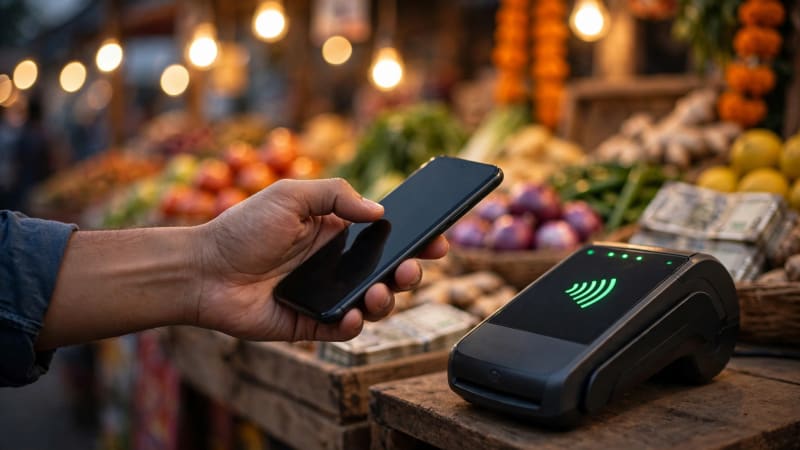
It took more than a decade to reach India
On September 30, Apple Pay finally went live in India. Axis Bank, the country's third-largest private lender, became the first Indian bank to carry the service, giving the wallet its first foothold in one of the world's largest digital payments markets.
The rollout began a day earlier. TechCrunch first reported the switch-on on Tuesday, September 29, with Axis Bank confirming the launch publicly on Wednesday. India had been one of the few major economies where Apple Pay was still unavailable.
"India is home to a dynamic and digitally savvy population that continues to embrace a cashless future while expecting the highest standards of security and privacy, and we're so excited to bring Apple Pay to users in India today," Jennifer Bailey, Apple's vice president of Apple Pay and Apple Wallet, said in a statement.
The timing is not accidental. Apple has been expanding iPhone sales, local manufacturing, and its retail footprint in India. Apple accounted for 28% of India's smartphone market by value in 2025, up from 23% a year earlier, according to Counterpoint Research. India also accounts for about a quarter of global iPhone production, a share that could rise to 30-35% over the next five years, the Business Standard reported last month, citing a government official.
Who can use it right now
The door is narrow at launch. Only Axis Bank credit cards issued on the Visa and Mastercard networks are eligible. Cards on the homegrown RuPay network are excluded. Axis Bank is India's fourth-largest credit card issuer, with 16.3 million cards outstanding as of August, out of 124 million nationwide, according to central bank data.
Adding a card takes minutes. Customers can add eligible cards through the Axis Bank mobile app or directly in Apple Wallet, then make payments in stores, in apps, and online using an iPhone, Apple Watch, or iPad. There is no need to type in a card PIN or wait for an OTP; each transaction is authenticated with Face ID, Touch ID, or the device passcode.
Security is the pitch Apple leads with. According to Axis Bank's statement, when a credit card is used with Apple Pay, the actual card number is not stored on the device or on Apple's servers, and Apple does not share it with the merchant. Customers also keep the rewards and other benefits offered on their Axis Bank credit cards.
Apple said the service would be accepted by "millions of merchants" across India, including Blinkit, Croma, Ixigo, Reliance brands, Tata 1mg, and Zomato. Behind the scenes, the company has worked with payment providers including Cashfree, JusPay, Mswipe, Paytm, PayU, Pine Labs, Razorpay, and Worldline to enable acceptance. Support for Mac is expected to be added soon.
"We are at a significant inflection point in payments, where technology, intelligent security and changing customer expectations are reshaping how people transact," Amitabh Chaudhry, Axis Bank's managing director and CEO, said in the bank's statement.
Where it works, and where it won't yet
Acceptance will be patchy at first, and Apple knows it. One person familiar with the matter told TechCrunch that an Apple Pay transaction "could work at a terminal operated by an independent payments provider that has enabled the service but fail at another terminal whose acquiring bank has not."
The unevenness is built into the model. Unlike UPI, which lets consumers make instant bank-to-bank payments without relying on cards, Apple Pay is card-based and requires individual issuers and payment infrastructure providers to integrate with the service. That makes a broad rollout more complex, and the early months will be a patchwork of terminals that accept it and terminals that don't.
Why India's biggest banks are holding out
Money is the sticking point. According to people familiar with the matter, Apple is seeking a fee of about 20 basis points, or 0.2%, on transactions, a significant bite out of the roughly 40 to 50 basis points of margin in the payments layer. The fee structure is broadly consistent with Apple's commercial model in other markets, they said.
HDFC Bank, ICICI Bank, and SBI Card are not supporting Apple Pay at launch, with negotiations over commercial terms still underway, one of the people told TechCrunch. Reuters had reported earlier in September that Apple held talks with HDFC Bank and ICICI Bank without agreeing commercial terms. Apple, Axis Bank, HDFC Bank, ICICI Bank, and SBI Card did not respond to requests for comment on the launch.
The UPI-shaped problem
Here is the hard part for Apple. India is not a card market. Its payments boom was built on the Unified Payments Interface, the real-time bank transfer system that accounts for 84% of digital payment volumes and is the world's largest retail fast-payment system by transaction volume, according to a 2025 IMF report. Scanning a QR code to pay directly from a bank account has become commonplace.
| Apple Pay | UPI | |
|---|---|---|
| Payment model | Card-based; each bank and payment provider must integrate separately | Real-time bank-to-bank transfers |
| Who can use it | Axis Bank Visa and Mastercard credit card holders, at launch | Consumers paying directly from bank accounts via QR code |
| Authentication | Face ID, Touch ID, or device passcode; no PIN or OTP | — |
| Share of digital payments | A narrow premium-card segment; RuPay excluded | 84% of volumes; world's largest retail fast-payment system by volume, per a 2025 IMF report |
| Apple's cut | About 0.2% of each transaction, per people familiar with the matter | — |
That does not mean Apple Pay has no constituency. It could appeal to India's growing base of iPhone users, who tend to be more affluent and are more likely to use premium credit cards, TechCrunch reports. Those customers could make the service hard for banks to ignore, despite UPI's dominance.
Even if Apple Pay remains a niche service, the economics could still make India meaningful for Apple. The transaction fee would give the company another way to monetize its growing base of iPhone users in the country, according to people familiar with the matter.
What to watch
The real contest now is commercial. Watch whether HDFC Bank, ICICI Bank, and SBI Card reach terms with Apple, whether RuPay ever makes the cut, and how quickly payment providers switch on the service at terminals across the country. If the fee talks drag on, Apple Pay stays a niche for Axis Bank's premium customers. If they don't, tap-to-pay on an iPhone could quietly become part of India's checkout counters.
Questions people ask
- Which cards can I use with Apple Pay in India?
- At launch, only Axis Bank credit cards on the Visa and Mastercard networks are supported. RuPay cards, which are issued widely in India, are excluded for now. Apple has said it plans to add more banks over time, but HDFC Bank, ICICI Bank, and SBI Card have not signed on yet.
- Do I need to enter a PIN or OTP when paying with Apple Pay?
- No. Transactions are authenticated on your device with Face ID, Touch ID, or your device passcode, so you skip the card PIN and the SMS one-time password at checkout. Your actual card number is tokenised and never stored on Apple's servers or shared with the merchant.
- Why aren't HDFC Bank, ICICI Bank, or SBI Card supported at launch?
- People familiar with the matter told TechCrunch that Apple is seeking a fee of about 0.2% per transaction, a significant slice of the 40 to 50 basis points of margin in India's payments layer. Negotiations with the big three lenders are still underway, and none has agreed to Apple's terms yet.
- Is Apple Pay the same as UPI?
- No. UPI is a real-time bank-to-bank system that accounts for 84% of India's digital payment volumes, per a 2025 IMF report. Apple Pay is card-based: it works with eligible credit cards stored in Apple Wallet and requires each bank and payment provider to integrate separately.
Sources
- Reuters (reuters.com)
- TechCrunch (techcrunch.com)
- IndianEconomicObserver (indianeconomicobserver.com)
- Storyboard18 (storyboard18.com)
Editorial Note: This explainer was researched using verified primary sources and official notifications, then independently fact-checked, reviewed, and finalized under human editorial guidance by the Gagariya desk.
Keep reading
technology · 26 Oct 2026
21 publishers challenge DPDP Act in Supreme Court
The DNPA petition argues consent and erasure rules could affect investigations, sources and published reports. The matter is listed for 27 October 2026.
technology · 26 Oct 2026
फ़र्ज़ी सरकारी वेबसाइट कैसे पहचानें: पूरी जाँच गाइड
असली जैसा दिखने वाला पोर्टल भी नकली हो सकता है। लिंक खोलने से पहले डोमेन, हड़बड़ी वाले दावे और OTP की माँग को परखें।
technology · 25 Oct 2026
OnePlus 15 gets ColorOS 17 early in India
ColorOS 17 has reached the OnePlus 15 in India ahead of schedule, replacing OxygenOS 16. Here is the build number, the download size, what is new, and when other OnePlus phones get it.
The day’s verified stories, one email, 7 am IST. No noise.