US approves $2.1bn sale of 500 Patriot missiles to Ukraine
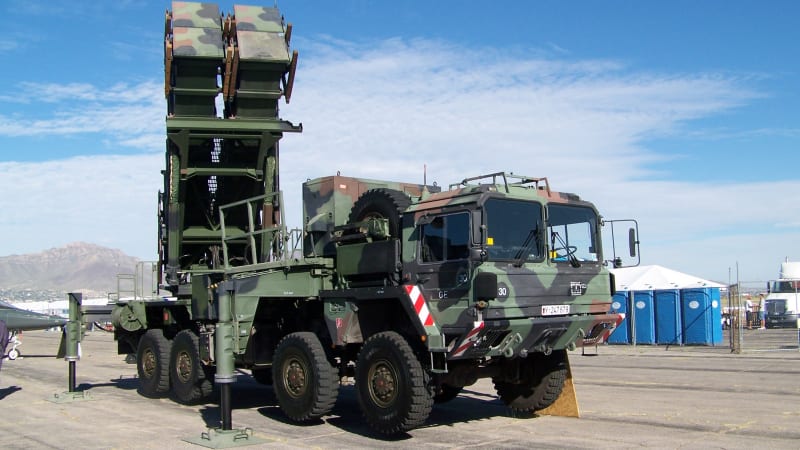
The United States State Department said on Friday 30 October that it had approved a proposed sale of 500 Patriot PAC-3 interceptor missiles to Ukraine, worth an estimated $2.1 billion. Lockheed Martin is the principal contractor for the package, the State Department said. The approval is a large commitment. The harder question is timing. The missiles covered by the sale have not yet been manufactured, and the announcement itself gives no delivery schedule. That gap is the central fact of this story.
What the approval covers
The package covers 500 Patriot Advanced Capability-3 Missile Segment Enhancement interceptors, along with spare parts, logistics and programme support. The $2.1 billion figure is the estimated value of the whole package, not the price of the missiles alone. The missiles are meant to replenish ammunition for Ukraine's existing Patriot batteries rather than to add new batteries. The announcement does not identify additional radars, launchers or engagement control stations. The State Department said the sale would sustain existing Patriot operations and improve Ukraine's air defence, and that implementation would not require additional United States government or contractor representatives in Ukraine.
Who pays, and how
Ukraine will pay for the purchase with donations from Canada, Germany and Norway routed through a United States programme called JUMPSTART, along with national funds financed by the European Union's Ukraine Support Loan. The State Department said no United States funds are involved in the sale. JUMPSTART, formally the Joint Ukraine Multinational Program, Services, Training and Articles Rapid Timeline, channels allied and partner donations into Ukrainian purchases through the United States Foreign Military Sales system. The programme was used in August to buy 3,350 air-launched cruise missiles worth $825 million.
The gap between approval and delivery
Despite Ukraine's urgency, the missiles are unlikely to arrive quickly. Two people briefed on the decision said the missiles, which are yet to be manufactured, are not expected to be delivered until a couple of years into the 2030s. President Volodymyr Zelenskyy welcomed the approval but warned that deliveries could take several years, and said Ukraine needed the Patriot missiles right now. The announcement itself gives no delivery schedule. The early-2030s expectation comes from people briefed on the decision, not from a confirmed production timetable, and should be read as a reported expectation rather than a promise. Kyiv is pushing for a faster route. One of the people briefed on the decision said Ukraine's Ministry of Defence is encouraging the Pentagon to bring forward the delivery date, possibly by giving Kyiv missiles already in the United States arsenal and backfilling with the new interceptors. President Zelenskyy has proposed transferring missiles from United States and allied inventories first, then replenishing stocks through later production, including a winter support package of 100 interceptors per month. That remains a Ukrainian proposal, not a confirmed arrangement. In July, the United States Army awarded Lockheed Martin a contract worth up to $58.6 billion to produce Patriot interceptor missiles. Lockheed Martin has said that deal would allow it to triple PAC-3 MSE production capacity by the end of 2030. Even so, Patriots have lengthy production times, with only about 600 missiles produced a year according to the United States Department of Defense.
Why Kyiv wants these missiles now
Ukraine has long said it urgently needs more interceptors, and the Patriot system is the most effective weapon available against fast-moving ballistic missiles. President Zelenskyy said Ukraine had been waiting almost a month for the United States to sign off on critical missile supplies. In his address on 30 October, he said Russia had launched 17 ballistic missiles overnight and described Patriot ammunition as being in short supply. He also said Russia had carried out more than 30 strikes on critical parts of Ukraine's power grid over the past two weeks, as attacks on energy infrastructure intensify ahead of winter. Those figures are the Ukrainian government's account. On Thursday 29 October, a Russian drone strike killed at least 14 people on a crowded rail platform in Dnipro, while five people died in strikes on two other provincial cities and one person was killed in a late-evening missile strike in Kyiv, officials said.
Terms to know
- PAC-3: Patriot Advanced Capability-3, the interceptor missile used by the Patriot air defence system.
- Interceptor: A missile fired to destroy an incoming missile or aircraft in flight, rather than to strike a ground target.
- JUMPSTART: A United States programme that uses allied donations to buy weapons, services and training for Ukraine.
Timeline
| Date | What happened |
|---|---|
| 14 October 2026 onwards | More than 100 ballistic missiles launched against Kyiv and the surrounding region, according to the 27 October address |
| 20 October 2026 | President Zelenskyy held talks with United States envoys in Oslo |
| 27 October 2026 | President Zelenskyy said Ukraine was running critically low on Patriot missiles |
| 29 October 2026 | Drone and missile strikes killed at least 20 people across Dnipro, two other provincial cities and Kyiv, officials said |
| 30 October 2026 | The State Department approved the proposed $2.1 billion sale of 500 Patriot PAC-3 missiles |
| Early 2030s | Delivery expected, according to two people briefed on the decision, not a confirmed schedule |
What to watch next
Three things will decide whether this approval turns into protection for Ukrainian cities. First, the formal steps that follow any approved Foreign Military Sale, including notification to Congress. Second, any production or allocation decision that brings deliveries forward, including whether missiles are drawn from existing inventories and backfilled later, as Kyiv has proposed. Third, the flow of allied funding through JUMPSTART and the European Union's Ukraine Support Loan, which must arrive for the purchase to proceed. No dates have been announced for any of these steps, and the delivery schedule remains unconfirmed until the State Department or Lockheed Martin publishes one. 📷 Photo credit: Mark Holloway, Wikimedia Commons (CC BY 2.0)
Questions people ask
- Has the sale been finalised?
- The State Department has approved the proposed sale. It is a Foreign Military Sale approval, and formal steps such as notification to Congress still follow. No delivery schedule has been announced.
- Who is paying for the missiles?
- Ukraine will pay with donations from Canada, Germany and Norway routed through the JUMPSTART programme, plus national funds financed by the European Union's Ukraine Support Loan. The State Department said no United States funds are involved.
- When will Ukraine actually receive the missiles?
- No date has been confirmed. The missiles are not yet manufactured, and two people briefed on the decision said delivery is not expected until a couple of years into the 2030s. President Zelenskyy has warned it could take several years.
- What is a PAC-3 interceptor?
- PAC-3 stands for Patriot Advanced Capability-3. It is the interceptor missile fired by the Patriot air defence system to destroy incoming threats, including fast-moving ballistic missiles.
- Does the $2.1 billion cover only the missiles?
- No. It is the estimated value of the whole package, which also includes spare parts, logistics and programme support.
Sources
- Reuters report as carried by Froggyweb (froggyweb.com)
- BBC-sourced report carried by Mamos Media (mamosmedia.com)
- Army Recognition (armyrecognition.com)
Editorial Note: This explainer was researched using verified primary sources and official notifications, then independently fact-checked, reviewed, and finalized under human editorial guidance by the Gagariya desk.
This story is informational only and is not financial advice. Decisions about money belong with a registered adviser — the sources above are a good place to start reading.
Keep reading
business · 31 Oct 2026
पेट्रोल निर्यात शुल्क शून्य, डीज़ल ₹11.50/लीटर
पेट्रोल निर्यात शुल्क खत्म, डीज़ल और ATF महंगे हुए निर्यात पर। नई दरें, हिसाब और आगे की समीक्षा।
business · 31 Oct 2026
Sensex 308 अंक चढ़ा, Nifty 23,053 पर बंद
अक्टूबर के आखिरी trading दिन Sensex और Nifty दोनों हरे निशान में बंद हुए, लेकिन broader market कमजोर रहा। अगला session सोमवार 2 नवंबर को होगा।

business · 31 Oct 2026
UN Western Sahara mission left without mandate
Rival US and Russian drafts both failed, and the 1991 Western Sahara mission now faces expiry on 31 October 2026 unless the Council agrees a last-minute extension.
The day’s verified stories, one email, 7 am IST. No noise.