Poland court chief suspended as president rushes home
A court with two claims to authority
Warsaw ended Friday, 30 October 2026, with Poland's Constitutional Tribunal at the centre of a dispute over who runs it. Judge Anna Korwin-Piotrowska suspended the tribunal's president, Bogdan Święczkowski, and its deputy, Bartłomiej Sochański, for one month. She then took charge of running the court, and the tribunal's website listed the suspension. The question now is not only who sits in the president's chair. It is whether rival decisions from inside the same court can both claim authority, and what the government, the president and the police do next.
The sequence on 30 October
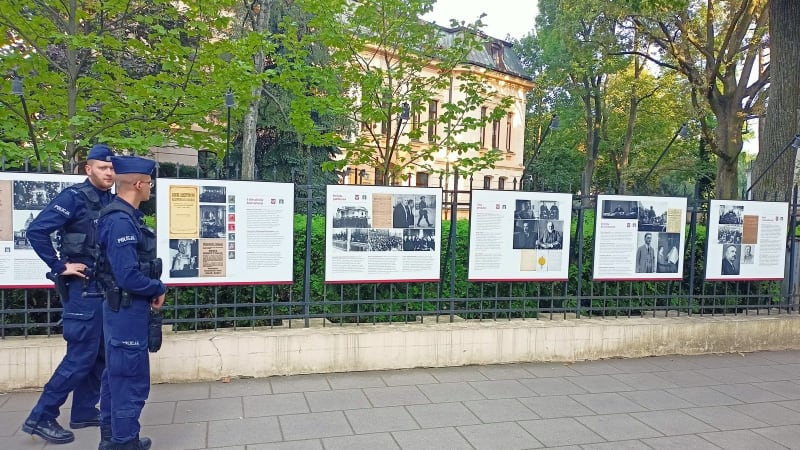
The day moved quickly. After the suspension was listed, police entered the tribunal's premises. The entry followed incidents outside the building, including dangerous objects thrown at police. Three people were detained after demonstrators breached the fence. The tribunal's existing leadership then rejected the move on its X account. It said the court's website had been unlawfully seized, insisted that Święczkowski remained president, and accused those involved of attempting a coup. That coup claim is an allegation by that side of the dispute. It is not an established fact. Meanwhile, President Karol Nawrocki was flying to Senegal. He turned his plane back mid-flight. On X he wrote: "At a moment like this, the President must be in Poland. I am cutting short my flight to Senegal. I am returning." He landed in Warsaw late on Friday and headed to the presidential palace for urgent talks. Justice Minister Waldemar Żurek said he had requested the lifting of immunity for Święczkowski and Sochański, accusing them of preventing newly elected judges from performing their duties.
Why the two sides disagree
The disagreement is about legitimacy, and each side describes the same events in opposite terms. On one side, Korwin-Piotrowska's suspension order and her move to run the court are presented as a change of leadership, and the tribunal website listing the suspension supports that reading. On the other side, the existing leadership says the website was seized unlawfully and that Święczkowski remains president. Both claims cannot be true at the same time in any practical sense. A court needs a single recognised head to schedule cases, sign orders and speak for the institution. Until a higher authority or a political settlement resolves the clash, officials and citizens face competing instructions from the same building.
A dispute that began in 2015
This crisis did not start on Friday. It grows out of a long-running dispute since 2015 between Prime Minister Donald Tusk's pro-European government and the national-conservative Law and Justice party, known as PiS, over control of the judiciary. Święczkowski is a former deputy justice minister under PiS. He had declined to allow judges elected by the current parliamentary majority to assume their duties. That refusal is central to the present clash. The government argues that newly elected judges should be able to take up their roles, while the tribunal's old leadership has resisted that change.
Glossary
The Constitutional Tribunal is Poland's court for judging whether laws agree with the constitution. Its president runs the court and shapes how it works day to day. Judicial immunity is a legal protection that shields judges from prosecution unless that protection is lifted through a formal process. That is why the justice minister's request matters. If immunity is lifted, the two suspended leaders could face proceedings over the accusation that they blocked newly elected judges. PiS, short for Law and Justice, is Poland's national-conservative party.
What this means beyond Poland
Poland is a member state of the European Union, and the crisis bears on EU rule-of-law politics. The EU has long watched Polish judicial disputes, because an independent court system is a condition of membership in practice. A tribunal that cannot agree on its own leadership weakens that picture. For readers in India, the limit of the story should be stated plainly. No direct impact on India has been reported. No trade, travel or diplomatic consequence for India appears in the facts of this case. The value of the story is context: how a judiciary dispute can escalate into a constitutional standoff inside a European democracy.
What happens next
The immediate focus will be on who controls the tribunal in the coming days. The suspension lasts for one month, which sets a clear window for the next moves. The immunity request will test whether proceedings against Święczkowski and Sochański move forward. The president's urgent talks at the palace may produce a political response, though no outcome from those talks has been reported yet. If that question stays unresolved, court business could stall and the dispute could deepen. The next confirmed development, whether a ruling, a lifted immunity or a political settlement, will show which side's claim the Polish state treats as effective.
Sources:
- Reuters report
- Europe Says
- Demócrata
- Devdiscourse (Reuters) 📷 फोटो: PanBe, Wikimedia Commons (CC0)
Questions people ask
- Who was suspended in Poland's Constitutional Tribunal?
- President Bogdan Święczkowski and deputy Bartłomiej Sochański were suspended for one month by Judge Anna Korwin-Piotrowska, who took charge of running the court.
- Why did police enter the tribunal premises?
- Police entered after incidents outside, including dangerous objects thrown at police. Three people were detained after demonstrators breached the fence.
- Why did President Karol Nawrocki return from Senegal?
- He turned his plane back mid-flight, writing on X that the president must be in Poland at such a moment. He landed in Warsaw late on Friday and went to the presidential palace for urgent talks.
- Why does the tribunal's old leadership reject the suspension?
- On its X account, it said the court's website had been unlawfully seized, insisted Święczkowski remained president, and accused those involved of attempting a coup. That is its allegation, not an established fact.
- Does this crisis directly affect India?
- No direct impact on India has been reported. Poland is an EU member state, so the crisis bears on EU rule-of-law politics, but no India-specific consequence appears in the reported facts.
Editorial Note: This explainer was researched using verified primary sources and official notifications, then independently fact-checked, reviewed, and finalized under human editorial guidance by the Gagariya desk.
This story is informational only and is not financial advice. Decisions about money belong with a registered adviser — the sources above are a good place to start reading.
Keep reading

business · 1 Nov 2026
EU €2 parcel fee from today: what Indian sellers must know
The €2 fee is permanent, applies regardless of parcel value, and is paid by the seller, platform or carrier — though shoppers may still see it passed on at checkout.
business · 1 Nov 2026
राज्यों को ₹1.09 लाख करोड़ अतिरिक्त किस्त मिली
31 अक्टूबर को जारी दूसरी अतिरिक्त किस्त में UP को ₹19,208 करोड़ और MP को ₹8,010 करोड़ मिले। यह रकम आम नागरिकों को सीधे नहीं मिलेगी, बल्कि राज्यों के खजाने में जाएगी।

business · 1 Nov 2026
1 नवंबर से GST में क्या बदला: छोटे विक्रेताओं को राहत
GST Council के फैसलों पर 1 नवंबर से चरणबद्ध अमल शुरू। छोटे विक्रेता, निर्यातक और छूट देने वाले कारोबारियों के लिए नियम बदले हैं।
The day’s verified stories, one email, 7 am IST. No noise.