EU charges TikTok over 'rabbit hole' For You feed
What the Commission found
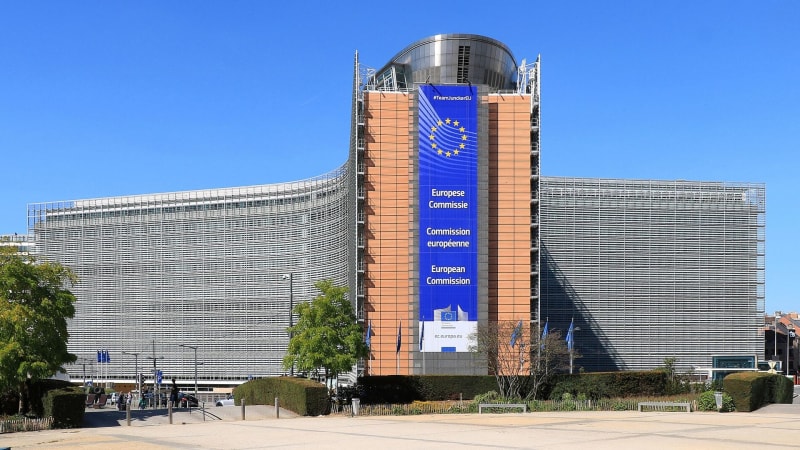
On Friday 6 November, the European Commission said it had preliminarily found TikTok in breach of the EU's Digital Services Act. The problem, in the Commission's words, is the For You feed itself: the recommender keeps serving more of whatever a user has already watched or liked, so people slide into long runs of videos about sadness, isolation or body image, and find it hard to climb out. The Commission said users are exposed to such content "endlessly and repeatedly", and that the pile-up harms mental health, above all for minors and vulnerable adults. Its preliminary assessment is that repeated exposure may deepen sadness or anxiety, feed body dissatisfaction and low self-esteem, or worsen eating disorders and existing mental-health conditions.
The Commission's case turns on what the algorithm treats as a signal. It said TikTok's feed leans heavily on viewing time, how long a clip holds a user's eyes, and gives too little weight to what users say they actually want. A "not interested" tap, the Commission said, may not be enough to change what the feed serves next. The platform's non-personalised feed, an option the Commission noted only 0.2% of users choose, and its feed-refresh tool, which does not reset preferences permanently, were judged too weak to break the loop. The Commission stressed it is not accusing TikTok of ignoring the risk. Its charge is that the measures in place are not proportionate, reasonable or effective.
What TikTok has to change
At this stage the Commission is asking for design changes, not imposing a final penalty. It said TikTok should give greater weight to users' explicit preferences, stop using viewing time as a signal for what to recommend, make its controls easier to find and use, and test its algorithm regularly. The point is structural: the feed should bend to what a user asks for, rather than to what keeps them watching.
What happens if the finding stands
The findings are preliminary and do not prejudge the outcome. TikTok can now read the Commission's investigation file and reply in writing, while the European Board for Digital Services is consulted in parallel. If the Commission confirms its views after hearing TikTok, it can adopt a formal non-compliance decision. That decision could carry a fine of up to 6% of the provider's total worldwide annual turnover, which in this case means ByteDance, TikTok's parent company. No fine has been imposed and no final decision has been announced.
TikTok disputes the findings. The company said the Commission's conclusions are "fundamentally inaccurate and distort our platform's architecture and our commitment to user safety".
Why this case is different
This is the first time the Commission has made a recommendation system itself the reason for a breach finding. Earlier action against TikTok under the same law targeted features around the feed: addictive design, in February 2026, and the protection of minors' accounts, in July 2026. The investigation itself opened in February 2024, and the Commission issued earlier findings on researcher data access on 24 October 2025. The evidence came from TikTok's own risk-assessment reports and internal documents, replies to information requests, scientific research, and interviews with experts; Ireland's digital services coordinator, Coimisiún na Meán, supported the investigation.
| Date | Step |
|---|---|
| 19 Feb 2024 | Commission opens formal proceedings against TikTok |
| 24 Oct 2025 | Findings on researcher data access |
| 6 Feb 2026 | Preliminary findings on addictive design |
| 24 Jul 2026 | Preliminary findings on protection of minors' accounts |
| 6 Nov 2026 | Preliminary findings on the For You recommender's rabbit-hole effect |
Henna Virkkunen, the Commission's Executive Vice-President for Tech Sovereignty, Security and Democracy, put the mechanism in one line: "Every time a user scrolls or likes a video on TikTok, the algorithm serves more of the same, leading users down rabbit holes they cannot easily escape from."
Meta is in the same queue
TikTok is not the only platform facing this question. The Commission is separately investigating rabbit-hole effects in the recommendation systems of Meta's Facebook and Instagram. On 10 July 2026 it issued preliminary findings that the two services' addictive design, including infinite scroll, autoplay and highly personalised recommendations, may breach the same law (IP/26/1579). That case is also at the preliminary stage, with no final decision announced.
What it means for India
TikTok itself has been out of India since 29 June 2020, when the electronics and IT ministry blocked it with 58 other apps on national-security grounds. So the ruling changes nothing for an Indian TikTok account, because there is none. What it changes is the template. Indian users meet the same feed design every day on Instagram Reels and YouTube Shorts: a stream that learns from watch time and keeps serving more of the same. The Commission's case is the first detailed public argument that such a design can itself break the law, and regulators elsewhere, including in India, will read it closely. Parents, teachers and creators in India should note the fixes the Commission asked for: explicit preferences over watch time, controls that are easy to find, and regular testing of the algorithm. Those are the levers any Indian debate about feed design will have to pull.
What to watch next
TikTok's written reply comes first, alongside the Board's consultation. The Commission has not announced a date for a final decision. The parallel Meta investigation is the other file to track: if the Commission applies the same reasoning to Facebook and Instagram, the rabbit-hole theory becomes the standard for every large feed in Europe.
Glossary: DSA: the EU's Digital Services Act, the rulebook for large online platforms. Recommender system: the algorithm that picks what a feed shows next. Rabbit hole: a loop where one kind of content leads to more of the same. VLOP: a very large online platform under the DSA.
Further reading
- European Commission preliminary findings on TikTok (IP/26/2361) — reported by ppc.land
- Agence Europe: Commission says TikTok fails to protect users from rabbit holes
- Securities.io: TikTok recommendation design draws preliminary DSA breach findings
- BBC: EU charges TikTok over harmful algorithmic 'rabbit hole' effects
- Glasgow Times: EU says 'rabbit hole' video feeds on TikTok violate its digital rules
- TechCrunch: India bans TikTok, dozens of other Chinese apps (June 2020)
📷 फोटो: EmDee, Wikimedia Commons (CC BY-SA 4.0)
Questions people ask
- What is the "rabbit hole effect"?
- The Commission's term for a feed that keeps serving more of the same kind of video once a user engages with it, so a person watching clips about sadness or body image gets more of them in a long run, with little chance to break out.
- Has TikTok been fined?
- No. The 6 November announcement is preliminary findings only. TikTok can reply in writing, and a fine of up to 6% of ByteDance's global annual turnover is possible only if the Commission confirms the breach in a final decision.
- Does this affect TikTok users in India?
- No, directly. TikTok has been banned in India since June 2020. The ruling matters as a template for how Instagram Reels and YouTube Shorts, which use the same feed design, could be regulated.
- What changes is the Commission asking for?
- More weight to explicit user preferences, no use of viewing time as a recommendation signal, easier-to-find controls, and regular testing of the algorithm.
- Is Meta facing the same charge?
- The Commission is separately investigating rabbit-hole effects in Facebook's and Instagram's recommenders, and issued preliminary findings on their addictive design on 10 July 2026. No final decision has been announced in that case either.
Sources
- ppc.land: European Commission preliminary findings on TikTok (IP/26/2361) (ppc.land)
- Agence Europe: Commission says TikTok fails to protect users from rabbit holes (agenceurope.eu)
- Securities.io: TikTok recommendation design draws preliminary DSA breach findings (securities.io)
- BBC: EU charges TikTok over harmful algorithmic 'rabbit hole' effects (bbc.bm)
- Glasgow Times: EU says 'rabbit hole' video feeds on TikTok violate its digital rules (glasgowtimes.co.uk)
- TechCrunch: India bans TikTok, dozens of other Chinese apps (June 2020) (techcrunch.com)
Editorial note: This story was researched from public sources and drafted with the help of AI tools. It was then read, checked against those sources and approved by the Gagariya editorial team before publication. How we work.
Keep reading

technology · 7 Nov 2026
Semicon 2.0 पोर्टल खुला, ECMS में 12 प्रोजेक्ट मंज़ूर
Semicon 2.0 पोर्टल खुल गया है और ECMS में ₹7,503 करोड़ के 12 प्रोजेक्ट मंज़ूर हुए हैं। सात राज्यों में बनने वाले इन प्रोजेक्ट से 7,127 नौकरियों का अनुमान है।
science · 7 Nov 2026
भारत अब Horizon Europe से जुड़ेगा, EU funding मिलेगी
6 नवंबर 2026 को बातचीत पूरी हुई। जनवरी 2027 से भारतीय शोधकर्ता EU के €93.5 अरब वाले Horizon Europe programme से सीधी funding पा सकेंगे।

technology · 6 Nov 2026
TRAI paves way for phone-to-satellite calls in India
TRAI's 5 November recommendations open a new route for satellite firms to supply capacity to telcos, including direct-to-device services. The DoT's decision is still pending.

technology · 4 Nov 2026
भारत के तीन स्वदेशी AI मॉडल लॉन्च: EKA-1 और Dhīr
IndiaAI Mission के तहत Soket Labs का EKA-1 और ZenteiQ के Dhīr 2B व 5B लॉन्च हुए। एक बड़ा मॉडल भारतीय भाषाओं के लिए, दो छोटे मॉडल बिना इंटरनेट के चलने के लिए।

technology · 4 Nov 2026
North Korea fires missiles toward East Sea, Seoul says
North Korea fired multiple missiles toward the East Sea early on 4 November 2026, Seoul's military said, with types and range still under analysis.

india · 4 Nov 2026
Brussels hosts Ukraine talks ahead of Abu Dhabi round
Brussels hosts Ukraine, US, European allies, NATO and the World Bank on 4 November, ahead of Abu Dhabi talks with Russia on 10-11 November.
The day’s verified stories, one email, 7 am IST. No noise.
