US strikes Iran's Qeshm Island as oil jumps past $105
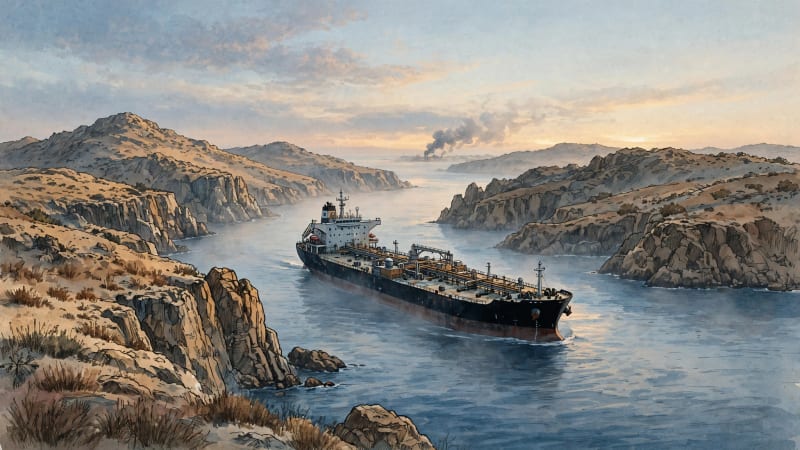
US officials have confirmed limited strikes on Iran's Qeshm Island in the Strait of Hormuz on 2 November 2026, according to reports from Reuters and CNN that cite officials speaking on condition of anonymity. The Wall Street Journal first reported the operation, citing US officials. The Pentagon referred questions to US Central Command, which had not responded to Reuters at the time of its report. That silence matters: what follows is the official account as reported, not an independently verified battle assessment.
What US officials say happened
One US official told CNN that the attack came in response to Iran firing at a US aircraft. Another official described the action in these terms: "This was a defensive measure for Iranians using surface to air missiles against US assets." Reuters reported a similar account, with officials describing the assaults as defensive in nature, aimed at preventing Iran from having freedom to attack commercial ships in the Strait of Hormuz. Fox News, citing officials, also described the strikes as defensive and linked them to Iran firing at a US aircraft.
Iranian state media outlet IRNA reported several explosions on Qeshm Island earlier on Monday, according to Reuters. That report establishes that explosions were reported on the island. It does not, on its own, establish what was hit, what was damaged, or whether anyone was killed or injured. No opened source gives a damage assessment or a casualty figure, and this pack does not carry one.
Limited action, not a new campaign, officials say
The officials cited by Reuters and CNN were careful to draw a line. One official told Reuters the strikes appeared limited and were not a resumption of major combat operations. CNN's account carries the same distinction: the action does not appear to be the kind of major combat operation officials have been contemplating. The Wall Street Journal reported that other such strikes have been carried out previously in secret, and that the recent strikes were kept small and quiet so as not to signal an intent to resume a major military campaign.
That framing sits uneasily beside the political calendar. The strikes were reported on 2 November, the eve of US midterm elections on 3 November. President Donald Trump said on Monday that a deal with Tehran could happen, and raised doubts about whether he would follow through on a threatened resumption of military strikes. Vice President JD Vance said the two sides had made some progress toward an off ramp to the war. At the same time, Vance added that the president retains kinetic and non-kinetic options. The two messages, diplomacy and the retained threat of force, were delivered on the same day.
What changed, and what did not
| Before the 2 November report | After the 2 November report |
|---|---|
| Markets were pricing in progress in US-Iran talks | Risk premium returned to oil prices, according to market analysts cited by Reuters |
| Recent US strikes, if any, were not publicly confirmed | US officials confirmed limited strikes on Qeshm Island |
| Tehran said contacts with the US were continuing | Tehran's position on continuing contacts was unchanged in Monday's reporting |
| Brent had settled sharply lower on Monday | Brent rose again in early Asian trade on Tuesday |
The oil market reaction was fast but modest in size. Brent crude futures rose 48 cents, or 0.5 percent, to $105.25 a barrel by 0104 GMT on Tuesday, while US West Texas Intermediate crude rose 47 cents, or 0.5 percent, to $96.93 a barrel. That rise followed a sharp fall on Monday, when Brent settled $8.66, or 7.63 percent, lower at $104.77 a barrel. One market analyst cited by Reuters said the report added a degree of risk premium back into the oil price, just when markets were starting to price in a more diplomatic path.
Why Qeshm Island matters
Qeshm Island sits about 14 miles from the Iranian port city of Bandar Abbas, according to CNN, and is key to Iran asserting control over traffic through the Strait of Hormuz. Reuters notes that the strait previously carried about a fifth of global crude oil and natural gas supplies, and that traffic through it has been sharply reduced since the US-Iran conflict began in late February. CNN puts the pre-war figure at about 20 million barrels of oil passing through the strait every day. The US has targeted the island previously in the war, according to CNN.
That geography explains why even a limited strike moves oil prices. The strait is the narrow exit for Gulf crude, and any sign of fighting near it raises the cost of insuring and routing shipments. It does not mean supplies have been cut. No opened source reports a closure of the strait or a halt to shipping as a result of the 2 November strikes, and this pack does not claim one.
Where talks stand
Tehran said on Monday that contacts between Iran and the US to end their war are continuing, after days of Iranian talks with Qatari mediators ended with altered proposals but no breakthrough, according to Reuters. Trump, in an appearance aired on Fox News on Monday night, did not specifically address the reports of new strikes, but said a deal was possible and defended his decision to launch the war in Iran.
For readers in oil-importing economies, the near-term question is not whether one night of limited strikes changes the war, but whether the pattern holds: small, unannounced strikes alongside continuing talks, with oil prices reacting to each report. Brent ended October at its highest in six months, according to Reuters, on concern the Middle East conflict could escalate again after Tuesday's US midterm elections. What happens after those elections, and whether the Qeshm strikes remain a one-night event or become part of a wider pattern, is the next thing to watch. No opened source confirms a further strike plan, and the pack does not speculate on one.
📷 Illustration: AI-generated
Questions people ask
- Did the US strike Iran's Qeshm Island?
- US officials confirmed limited strikes on Qeshm Island on 2 November 2026, as reported by Reuters and CNN. The Wall Street Journal first reported the operation. US Central Command had not responded to Reuters at the time of its report.
- Why does the US say it struck Qeshm Island?
- Officials described the strikes as defensive, aimed at stopping Iranian surface-to-air missile fire against US assets and preventing attacks on commercial shipping in the Strait of Hormuz.
- What happened to oil prices?
- Brent crude rose 48 cents to $105.25 a barrel in early Asian trade on 3 November, after settling $8.66 lower at $104.77 on Monday. US crude rose 47 cents to $96.93.
- Is this a return to major combat?
- Officials cited by Reuters and CNN said the strikes appeared limited and were not a resumption of major combat operations. That is the officials' characterisation, not an independently verified assessment.
- What is Iran's stated position on talks?
- Tehran said on Monday that contacts with the US to end the war are continuing, after talks with Qatari mediators ended with altered proposals but no breakthrough.
Sources
Editorial Note: This explainer was researched using verified primary sources and official notifications, then independently fact-checked, reviewed, and finalized under human editorial guidance by the Gagariya desk.
This story is informational only and is not financial advice. Decisions about money belong with a registered adviser — the sources above are a good place to start reading.
Keep reading

business · 2 Nov 2026
1 जनवरी 2027 से नए हवाई किराया नियम: क्या बदलेगा
1 जनवरी 2027 से नए aviation नियम: असाधारण स्थिति में सरकार किराया निर्देश दे सकेगी, टिकट पर कुल राशि का पूरा ब्योरा अनिवार्य, लेकिन कोई स्थायी cap नहीं।
business · 2 Nov 2026
US reportedly floats Russian gas return via Ukraine
A reported US proposal would sell Russian gas to Europe through Ukraine via an American intermediary, aiming for a pre-winter energy ceasefire. It is unconfirmed and faces firm EU opposition.
business · 2 Nov 2026
Sensex +1,233, Nifty 23,440 पार: Reliance 11.6% उछला
Sensex 1,233 अंक चढ़ा, Nifty 23,440 पार; Reliance 11.6% उछला, कच्चा तेल सस्ता हुआ।
The day’s verified stories, one email, 7 am IST. No noise.