US shutdown set to become longest in US history
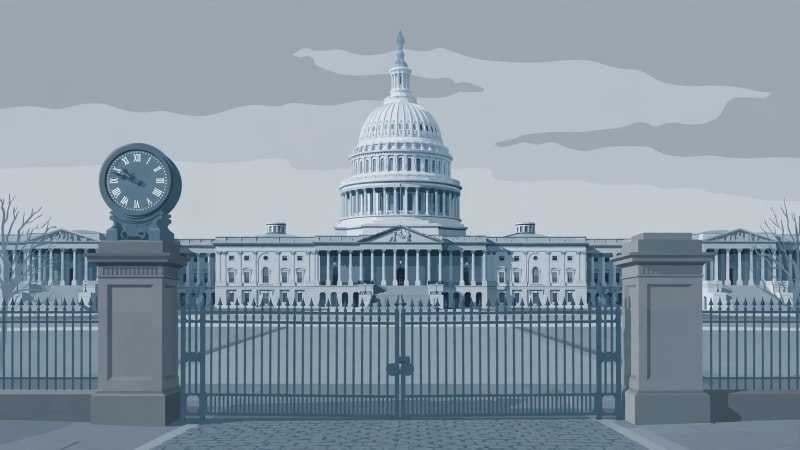
On Wednesday, 4 November, the US Senate again failed to pass a temporary funding bill, the 14th unsuccessful attempt to end the impasse. With that vote, the shutdown entered its 35th day. The next day without a funding deal is the day it passes the 35-day record set in 2018-2019.
Why the 14th vote failed
The bill in question was the House-passed "clean" continuing resolution, which would fund the government at current levels through 21 November. In the Senate it needed 60 votes to overcome a filibuster and proceed. It received 54 votes in favour and 44 against, so it fell short of that threshold. The disagreement behind the repeated failures is over health-care subsidies. Senate Democrats have held out for an extension of enhanced Affordable Care Act subsidies that are set to expire at the end of December, while the House-passed bill funds the government without that extension. Until one side accepts the other's terms, or a compromise is negotiated, the same bill keeps returning to the Senate and keeps falling short of 60 votes.
Comparison with the previous record
| Shutdown | Length | Outcome |
|---|---|---|
| December 2018 to January 2019 | 35 days | Previous longest shutdown in US history |
| Current shutdown, as of the 4 November Senate vote | Entered its 35th day | Set to pass the 35-day record if it continues one more day without a deal |
| If no funding deal is reached | Beyond its 35th day | Would set a new record for the longest US federal shutdown |
| The comparison matters because the length itself is now the story. A shutdown that passes 35 days is no longer a brief funding lapse. It is a disruption measured in weeks, and its effects grow with each additional day it continues. |
What a shutdown actually means
A shutdown happens when the US Congress has not passed funding legislation for the federal government. Federal agencies then operate under lapse-of-funding rules: essential functions continue, while many non-essential operations stop or slow down. The practical effect is uneven. It does not mean the whole US government closes, and it does not mean every public service stops at once. It means that anything depending on lapsed funding is interrupted, delayed or run with reduced staff until Congress restores funding. The economic cost is also being counted. The Congressional Budget Office has estimated that if the shutdown continues for eight weeks, it could cost the US economy 14 billion dollars. The same office has estimated that a shutdown of this length could reduce real GDP growth in the fourth quarter by 1 to 2 percentage points. Those are estimates for a longer shutdown, not a final bill for the shutdown so far, and they depend on how long the impasse lasts.
What does this mean for Indian readers?
For most Indian readers, the direct effects are narrow but real, and they centre on travel and immigration paperwork rather than on daily life in India. Visa operations are the first thing to check. University guidance for international students notes that consular operations, including visa issuance, are funded by application fees and generally remain operational during a shutdown. The same guidance warns, however, that processing times may be affected if the shutdown continues for an extended period, and that backlogs could occur. The safe reading is that visa services have not stopped, but delays are possible, and applicants should follow the guidance of the specific US embassy or consulate handling their case. Immigration processing through US Citizenship and Immigration Services (USCIS) is also largely fee-funded, so it generally continues during a shutdown. University and law-firm guidance notes that interviews, naturalisation ceremonies and contact-centre responses may still be delayed if resources are reprioritised, and that a case can slow down if it depends on a government function that is suspended. Border inspections by Customs and Border Protection are treated as essential and are expected to continue as usual. For people with employer-linked US paperwork, the risk is in the chain of approvals. Department of Labor steps that feed into some work-visa filings have been reported as suspended during the shutdown in university guidance, which can delay related petitions. Applicants in this position should check with their employer or lawyer rather than assume a filing is moving on its normal timetable. No specific effect on Indian markets or on India-US trade was verified from the sources checked for this post, and none is claimed here. The verified economic effects are the US figures above: the estimated cost of a longer shutdown and the estimated effect on US quarterly growth.
What happens next?
The immediate question is whether the Senate can find 60 votes for a funding bill, or whether party leaders negotiate a compromise that changes the terms, including the disputed health-subsidy extension. The House-passed bill's funding horizon is 21 November, so that date is a natural pressure point, but it is not a deadline that ends the shutdown by itself. If no deal is reached, the shutdown passes the 35-day record and keeps counting. If a deal is reached, federal operations restart, but backlogs built up over five weeks will take time to clear. Watch the next Senate vote: a result above 60 would end the shutdown, while another result below 60 would extend the record further.
Further reading
US Senate: 14th Senate vote to reopen government fails Senate fails to pass temporary funding bill for 14th time Columbia University: impact of shutdown on international scholars and students UC Berkeley: federal government shutdown guidance Fragomen: federal shutdown and immigration functions 📷 Illustration: AI-generated
Questions people ask
- How long is the US shutdown now?
- As of the Senate vote on 4 November, it had entered its 35th day. It becomes the longest in US history if it continues past the 35-day record set in 2018-2019.
- Why can't the Senate end it?
- The funding bill needs 60 Senate votes to proceed, and the 4 November vote was 54-44. Democrats are seeking an extension of Affordable Care Act subsidies; the House-passed bill does not include it.
- Are US visa services stopped?
- No, on the guidance checked for this post. Consular visa operations are fee-funded and generally remain operational, but processing delays and backlogs are possible in a longer shutdown.
- Does the shutdown affect travel to the US?
- Border inspections are treated as essential and are expected to continue. Visa and immigration paperwork may be slower, so applicants should check embassy guidance and allow extra time.
- What happens if the shutdown continues?
- It sets a new record for length, and the Congressional Budget Office has estimated an eight-week shutdown could cost the US economy 14 billion dollars.
Sources
- US Senate: 14th Senate vote to reopen government fails (capito.senate.gov)
- Senate fails to pass temporary funding bill for 14th time (dxbnewsnetwork.com)
- Columbia University: impact of shutdown on international scholars and students (isso.columbia.edu)
- UC Berkeley: federal government shutdown guidance (internationaloffice.berkeley.edu)
- Fragomen: federal shutdown and immigration functions (fragomen.com)
Editorial note: This story was researched from public sources and drafted with the help of AI tools. It was then read, checked against those sources and approved by the Gagariya editorial team before publication. How we work.
This story is informational only and is not financial advice. Decisions about money belong with a registered adviser — the sources above are a good place to start reading.
Keep reading

business · 5 Nov 2026
SEBI-BHASHINI pact to take investor services regional
SEBI and Digital India BHASHINI signed an MoU on 3 Nov 2026 for investor services in regional languages. No services, languages or launch dates have been announced yet.

business · 4 Nov 2026
Sensex 77,301, Nifty 23,960 पर बंद: 5वें दिन भी तेज़ी
लगातार पांचवें दिन तेज़ी: Sensex 384 अंक और Nifty 150 अंक चढ़े, Nifty 24,000 से सिर्फ 39 अंक दूर।
india · 4 Nov 2026
Democrats win US Senate and House in midterm rout
A Democratic wave swept both chambers of Congress: seven Senate seats flipped, the House crossed 218, and Trump's final two years now face an opposition Congress.

business · 4 Nov 2026
अक्टूबर का अंतिम Services PMI 55.8: चार महीने का उच्च स्तर
अक्टूबर 2026 का अंतिम Services PMI 55.8 रहा, सितंबर के 55.2 से ऊपर। घरेलू मांग ने ग्रोथ संभाली, निर्यात और भर्ती सुस्त रहे, लागत महंगाई छह साल के निचले स्तर पर आई।

business · 3 Nov 2026
31 dead as Russia bombs Ukraine aid centre, toll rises
The toll rose from 26 to 31 through Tuesday as bodies were pulled from the rubble of a school used for weekly aid distribution. Dozens are still missing.

business · 3 Nov 2026
GM उत्पादों का आयात कभी नहीं होगा: गोयल
गोयल ने कहा कि जीएम उत्पादों का आयात कभी नहीं होगा और डेयरी किसी भी व्यापार समझौते में सुरक्षित रहेगी। निर्यात लक्ष्य 1 ट्रिलियन डॉलर है।
The day’s verified stories, one email, 7 am IST. No noise.