SEBI-BHASHINI pact to take investor services regional
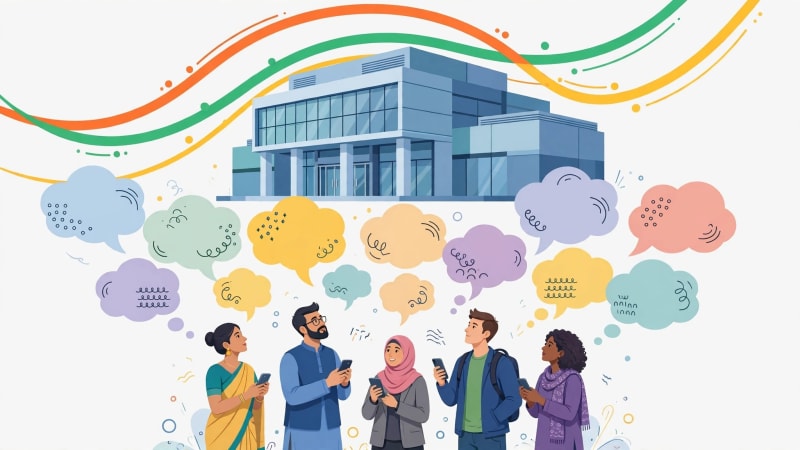
The Securities and Exchange Board of India signed a memorandum of understanding with the Digital India BHASHINI Division on 3 November 2026. SEBI said the agreement came into force on the day of signing. It was signed in New Delhi by Amitabh Nag, Chief Executive Officer of the Digital India BHASHINI Division, and Sandip Pradhan, Whole Time Member of SEBI, in the presence of senior officials from both organisations. The purpose is straightforward to state and harder to deliver. SEBI wants its services and investor education material to reach people in Indian regional languages, not only in English. BHASHINI provides the language technology to help with that shift. What the agreement does not do, at least for now, is launch any named service in any named language on any named date. That distinction matters for investors reading headlines about the pact.
The change on 3 November
Before this agreement, there was no formal framework of this kind between the market regulator and the government's language technology division for this purpose. SEBI said the pact creates a formal framework for technological integration between the two sides. In practice, that means SEBI can now draw on BHASHINI's language translation tools, programming interfaces, models and related systems as part of its work. The tools named in the SEBI release are four in number. They are Automatic Speech Recognition, Text-to-Speech, Machine Translation and Optical Character Recognition. Together, they cover the main ways people meet official information. Speech recognition can turn spoken words into text. Text-to-speech can read written material aloud. Machine translation can move text between languages. Optical character recognition can read text from scanned documents and images. SEBI said these tools will help make its services accessible in regional Indian languages. The agreement also works in the other direction. SEBI said it will help improve BHASHINI's language models with securities market terminology. That is an important detail. General translation tools often struggle with market terms, and a mistranslated term in a financial document can change its meaning. Feeding market vocabulary into the models is meant to reduce that risk over time, though SEBI has not said how that work will be tested or measured.
What is not live yet?
This is where readers should be careful. SEBI has not announced which of its services will come first, which languages will be prioritised, or when the first service will go live. No rollout timetable has been published with the agreement. The next step, as described in reporting of the release, is technical integration and testing. Until that work produces a service announcement, investors should treat the MoU as a starting framework, not as a finished product. That caution also applies to any message that claims a SEBI service is already available in a particular regional language because of this pact. No such claim is supported by the SEBI release. Investors should check SEBI's own website and press releases for confirmed announcements, and they should be wary of anyone using the BHASHINI name to ask for personal or financial details. The MoU itself does not create a new channel for collecting investor information.
Effects and what to watch
The most direct beneficiaries, when services do arrive, would be investors and potential investors who are more comfortable in a regional language than in English. Market documents, investor education material and regulatory communications are often written in dense English. For a first-time investor, that language barrier can be as real as any other barrier to entry. A reliable translation, or a spoken version in a familiar language, could make it easier to understand risks, charges and procedures before investing. For now, the practical advice is to watch rather than to act. Investors who prefer a regional language can watch for three things in future SEBI announcements. First, the name of the service that is actually going live. Second, the list of languages it supports at launch. Third, whether the service covers education material only, or also covers grievance and service functions. Those three details will tell readers far more than the MoU announcement itself. Until they appear, existing SEBI services and channels remain the ones to use. Market intermediaries and educators may also be affected in time. If SEBI's material becomes available in more languages, firms that explain products to clients may need to align their own material with the official versions. But again, that depends on what SEBI actually publishes, and in which languages. No intermediary should present a translated summary as an official SEBI version unless SEBI has said so.
Glossary
| Term | What it means in this story |
|---|---|
| BHASHINI | The government's National Language Translation Mission platform, run through the Digital India BHASHINI Division. |
| ASR | Automatic Speech Recognition, which converts spoken words into written text. |
| OCR | Optical Character Recognition, which reads text from scanned pages and images. |
What happens next?
The agreement is already in force, since SEBI said it came into force on the day of signing, 3 November 2026. What follows now is the slower work of integration. SEBI and the BHASHINI division will need to connect systems, adapt models to market terminology, and test whether the output is accurate enough for regulatory and educational use. SEBI has not given a date for that work to finish, or for the first service to appear. Investors should therefore expect further announcements, service by service, rather than a single launch day for everything. The useful question to ask of each future announcement is simple. Is this service actually available, in which language, and for what task? When SEBI answers those three questions for a named service, the promise of this MoU will have started to become real. Until then, the pact is best read as intent backed by a framework, with delivery still to be proven.
Further reading
SEBI release as reported by The Hindu BusinessLine Live Law report on the SEBI release New Kerala report on the SEBI release eGov summary noting no services or dates announced 📷 Illustration: AI-generated
Questions people ask
- What did SEBI and BHASHINI agree on 3 November 2026?
- SEBI said they signed an MoU under which SEBI can use BHASHINI's language tools, including speech recognition, text-to-speech, machine translation and OCR, to make its services accessible in regional Indian languages.
- Is any SEBI service already available in a regional language because of this MoU?
- No specific service, language or launch date has been announced. SEBI has not said that any service is live under this pact, and rollout will depend on technical integration and testing.
- Who signed the MoU?
- SEBI said it was signed by Amitabh Nag, Chief Executive Officer of the Digital India BHASHINI Division, and Sandip Pradhan, Whole Time Member of SEBI.
- What is the Digital India BHASHINI Division?
- SEBI said it is an independent division functioning under the Digital India Corporation, a Section 8 not-for-profit company established by the Ministry of Electronics and Information Technology.
- What should investors watch for next?
- Investors should watch for future SEBI announcements naming a specific service, its supported languages, and whether it covers education material only or also covers service and grievance functions.
Editorial note: This story was researched from public sources and drafted with the help of AI tools. It was then read, checked against those sources and approved by the Gagariya editorial team before publication. How we work.
This story is informational only and is not financial advice. Decisions about money belong with a registered adviser — the sources above are a good place to start reading.
Keep reading
business · 5 Nov 2026
US shutdown set to become longest in US history
The Senate failed for a 14th time on 4 November to pass a funding bill, 54-44 against the 60 votes needed. The shutdown has entered its 35th day.

business · 4 Nov 2026
Sensex 77,301, Nifty 23,960 पर बंद: 5वें दिन भी तेज़ी
लगातार पांचवें दिन तेज़ी: Sensex 384 अंक और Nifty 150 अंक चढ़े, Nifty 24,000 से सिर्फ 39 अंक दूर।

business · 4 Nov 2026
अक्टूबर का अंतिम Services PMI 55.8: चार महीने का उच्च स्तर
अक्टूबर 2026 का अंतिम Services PMI 55.8 रहा, सितंबर के 55.2 से ऊपर। घरेलू मांग ने ग्रोथ संभाली, निर्यात और भर्ती सुस्त रहे, लागत महंगाई छह साल के निचले स्तर पर आई।

business · 3 Nov 2026
31 dead as Russia bombs Ukraine aid centre, toll rises
The toll rose from 26 to 31 through Tuesday as bodies were pulled from the rubble of a school used for weekly aid distribution. Dozens are still missing.
business · 3 Nov 2026
GM उत्पादों का आयात कभी नहीं होगा: गोयल
गोयल ने कहा कि जीएम उत्पादों का आयात कभी नहीं होगा और डेयरी किसी भी व्यापार समझौते में सुरक्षित रहेगी। निर्यात लक्ष्य 1 ट्रिलियन डॉलर है।

business · 3 Nov 2026
Sensex 1,225 अंक चढ़ा, Nifty 23,810 पर बंद
सेंसेक्स 1,225 अंक और निफ्टी 370 अंक चढ़े। लगातार चौथे दिन बाजार हरे निशान में बंद हुआ, एफएमसीजी सबसे आगे रहा।
The day’s verified stories, one email, 7 am IST. No noise.