India–NZ FTA goes live today: what Indian exporters gain
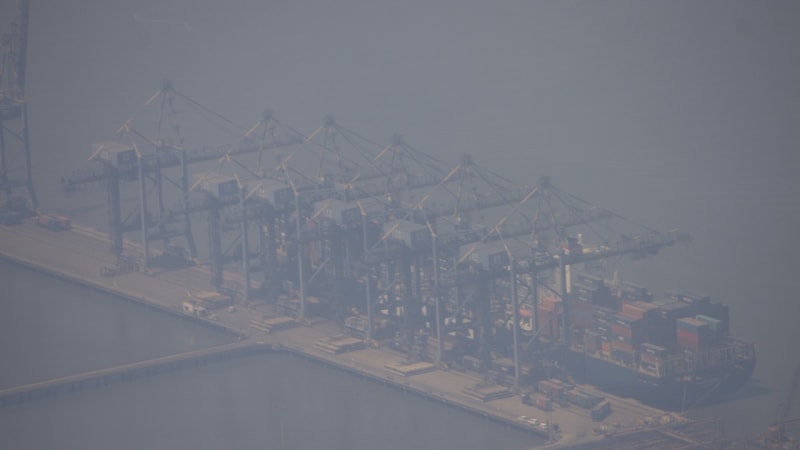
India–New Zealand FTA goes live today: what changes for Indian exporters
The India–New Zealand free trade agreement entered into force on 20 October 2026 – Vijay Dashami day – after Commerce Minister Piyush Goyal's announcement with New Zealand's Todd McClay. From today, New Zealand gives duty-free access to every Indian export line, while India opens about 70% of its tariff lines with dairy kept fully protected.
What exactly starts today
The agreement, signed on 27 April 2026 at Bharat Mandapam in New Delhi by Goyal and McClay, became legally operational on 20 October, according to AffairsCloud's current-affairs roundup. ANI reported that Goyal made the entry-into-force announcement during a virtual interaction with Todd McClay, New Zealand's Minister for Trade and Investment.
Goyal linked the date to the festival in his post: "the India-New Zealand FTA will enter into force on 20th October 2026, on the occasion of Vijay Dashami," as quoted by Virgin Radio Dubai. New Zealand's parliament had ratified the deal on 17 September with a 93-29 vote, theindianpostlive reported. On the Indian side, the Department of Revenue issued a notification under Section 25(1) of the Customs Act, 1962, prescribing revised Basic Customs Duty and cess rates for specified goods under the pact, according to AffairsCloud.
What India wins on day one
This is the headline concession for Indian exporters. New Zealand removes tariffs on 100% of Indian export tariff lines – all 8,284 of them – from the entry-into-force date, AffairsCloud reported. AsiaDaily put it in practical terms: duties of up to 10% on clothing, textiles, leather and footwear disappear today.
ANI, via Devdiscourse, listed the sectors expected to gain most: textiles, leather, footwear, engineering goods and processed agricultural products. Theindianpostlive added gems to that list.
What New Zealand gets — and what India kept out
The concessions run one way more than the other. Here is how the market-access split looks, across the reporting:
| Item | What the deal says |
|---|---|
| India's opening | About 70.03% of tariff lines, covering 95% of bilateral trade value by value (AffairsCloud) |
| Phased cuts | Remaining reductions spread over 3 to 10 years (Particle) |
| Dairy | Excluded — fully protected, no concessions (theindianpostlive) |
| Apples, kiwifruit | Tariff-rate quotas from 2027 — quantity limits, minimum import prices, seasonal windows (AsiaDaily) |
| Mānuka honey, albumin | Tariff-rate quotas from 2026; unused allocations expire (AsiaDaily) |
| Wine | Tariffs fall from 150% to 25% or 50% over 10 years, depending on product value (Virgin Radio Dubai) |
The dairy exclusion matters politically: it was the most-watched Indian red line through the negotiations, and the final text keeps it intact, per theindianpostlive.
The $20 billion pledge and the visa routes
Beyond goods, the pact carries money and mobility. New Zealand has pledged up to $20 billion in investment into India over 15 years, Inshorts reported – a figure confirmed across theindianpostlive and Particle's reporting. India will set up a dedicated New Zealand investment desk to identify projects and support investors, according to Inshorts.
On people movement, the deal opens two streams, Particle reported: an annual 5,000-place Temporary Employment Entry visa for skilled Indians, and a 1,000-place Working Holiday visa. Theindianpostlive framed it as around 5,000 visas plus expanded study, work and mobility pathways. Services commitments cover more than 100 sectors, per the AffairsCloud summary; AsiaDaily counted 118 sectors and subsectors.
One number the sources don't agree on
The deal sits under the India–New Zealand Strategic Partnership and Roadmap to 2030, which aims to double bilateral trade – but the target figure varies by source. AffairsCloud cites nearly Rs 35,000 crore in goods and services over the next four to five years. Theindianpostlive reports a $5 billion target within five years. AsiaDaily puts the figure at NZ$7 billion in goods and services trade by 2030. gagariya records the disagreement without picking one: the doubling goal is consistent across sources, the exact target number is not.
For context, current two-way trade is about $2.3 billion in the 12 months through June, McClay said in the Virgin Radio Dubai report.
What this fits into
The New Zealand deal is one piece of a wider trade push. ANI reported that India and Canada are targeting the conclusion of their Comprehensive Economic Partnership Agreement (CEPA) negotiations by the end of 2026. The fifth round of talks was held in Ottawa from 5 to 9 October, covering market access, investment, rules of origin, intellectual property and trade remedies, with the next round planned for early November in New Delhi.
During the Team Canada Trade Mission, Indian and Canadian entities signed 34 commercial agreements and MoUs worth nearly CAD 300 million (about Rs 1,800 crore) at the Canada–India Business Ceremony in Karnataka, in the presence of Canada's Minister of International Trade, Maninder Sidhu, ANI reported.
Commerce Ministry trade data for April-September 2026 showed exports rising across major partners, per ANI via Devdiscourse: to the United Kingdom to $7.32 billion (from $6.83 billion a year earlier; the India-UK trade agreement came into force in July 2026), to China to $11.41 billion (from $8.39 billion), and to the European Union to $31.92 billion (from $30.61 billion). Negotiations continue with the United States, Israel, Chile and Peru, LatestLY reported.
Practical takeaways
- If you export textiles, leather, footwear, gems, processed foods or engineering goods, your consignments to New Zealand enter duty-free from today.
- The tariff schedules and the revised BCD notification are what your customs broker needs, not the headlines – check the Department of Revenue notification.
- Importers watching New Zealand wine, apples or kiwifruit: those concessions arrive on timetables and quotas, not on day one.
- Job-seekers and students: the 5,000-place skilled-worker stream and 1,000-place Working Holiday visa are the new pathways to track.
Questions people ask
- When does the India–New Zealand FTA come into force?
- 20 October 2026. Commerce Minister Piyush Goyal announced the entry-into-force date alongside New Zealand's Trade and Investment Minister Todd McClay; the deal was signed on 27 April 2026 and ratified by New Zealand's parliament on 17 September.
- What does the India–NZ FTA mean for Indian exporters?
- New Zealand removes tariffs on 100% of Indian export tariff lines — 8,284 lines — from day one. Sectors expected to gain most include textiles, leather, footwear, engineering goods, processed agricultural products and gems, according to ANI and theindianpostlive.
- Is dairy protected under the India–New Zealand FTA?
- Yes. Dairy is fully excluded from India's tariff concessions, theindianpostlive reported. India liberalised only about 70% of its tariff lines, with roughly 30% — including dairy — kept out.
- What visa benefits does the India–NZ FTA include?
- Particle reported a 5,000-place annual Temporary Employment Entry visa for skilled Indians and a 1,000-place Working Holiday visa, alongside services commitments across 118 sectors and subsectors.
- What is the $20 billion investment pledge under the India–NZ FTA?
- New Zealand has pledged up to $20 billion in investment into India over 15 years, reported by Inshorts, theindianpostlive and Particle. India will set up a dedicated New Zealand investment desk to support project identification.
Sources
- ANI via Devdiscourse (devdiscourse.com)
- AffairsCloud (affairscloud.com)
- AsiaDaily (asiadaily.org)
- Inshorts (inshorts.com)
- Virgin Radio Dubai (virginradiodubai.com)
Editorial Note: This explainer was researched using verified primary sources and official notifications, then independently fact-checked, reviewed, and finalized under human editorial guidance by the Gagariya desk.
This story is informational only and is not financial advice. Decisions about money belong with a registered adviser — the sources above are a good place to start reading.
Keep reading
business · 26 Oct 2026
रद्द टिकट पर GST रिफंड: GSTAT का फैसला क्या कहता है
GSTAT ने रद्द टिकटों पर GST रिफंड की अनुमति दी है, बशर्ते एयरलाइन ने यात्रियों को पूरा किराया और टैक्स लौटाया हो और इसका सबूत हो।
business · 25 Oct 2026
अक्टूबर में विदेशी निवेशकों ने ₹48,056 करोड़ निकाले
अक्टूबर में FPI निकासी ₹48,056 करोड़; 2026 का कुल आँकड़ा ₹3.08 लाख करोड़ — पूरे 2025 का लगभग दोगुना। छोटे शेयरों पर सबसे ज़्यादा मार।
business · 25 Oct 2026
भुवनेश्वर में RBI का ₹169 करोड़ डेटा सेंटर शुरू
RBI का नया डेटा सेंटर भुवनेश्वर में शुरू — ₹169 करोड़, 18.55 एकड़, Tier IV प्रमाणन, RTGS-NEFT की बैकअप व्यवस्था।
The day’s verified stories, one email, 7 am IST. No noise.