G20 Atlanta: Jaishankar urges diplomacy over war
A meeting that ended without agreement
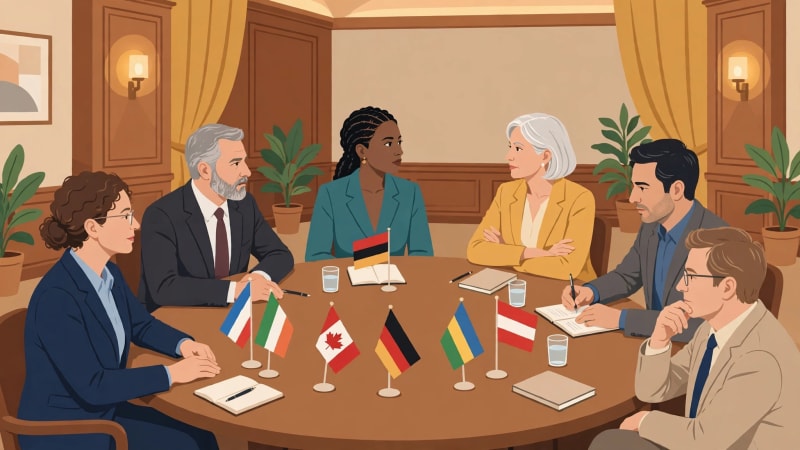
The G20 foreign ministers wrapped up two days of talks in Atlanta on Saturday 31 October without reaching consensus on several critical global security issues. Divisions over Russia's war in Ukraine overshadowed the opening, and differences also ran over the war in West Asia, tariffs and actions in the South China Sea. As a result, the group issued no joint communique. US Secretary of State Marco Rubio, who hosted and chaired the meeting, released a chair's statement summarising the talks instead. Rubio himself acknowledged the limits at the closing news conference, saying he would not pretend the ministers were close to universally accepted solutions.
The absence of a communique is itself the outcome to understand. A joint communique would have meant all members signed the same words. A chair's statement means the host recorded what was discussed and what members identified as priorities, including energy security, food security and freedom of navigation, without claiming negotiated agreement. One visible sign of the divisions came on the first day, when reporting said the traditional group photograph was cancelled after European diplomats objected to appearing alongside Russian Foreign Minister Sergey Lavrov.
What India said in the first plenary
Jaishankar spoke at the first plenary session on 30 October, and his message was direct. He said that in the face of global challenges, military solutions will not work and diplomacy must be given a chance. He added that tactical calculations should not lead to overlooking the dangers of terrorism, calling it a high-risk activity which has come back to bite even its practitioners. He did not name any country in that social media summary of his remarks. The remarks were made against the backdrop of two major conflicts with global ramifications, the Russia-Ukraine war and mounting tensions in West Asia.
The second half of India's argument was about who pays the price. Jaishankar said the Global South is disproportionately bearing the consequences of attacks on civilian shipping and seafarers, jeopardising the availability and cost of fuel, food and fertilisers. He stressed the urgent need to preserve freedom of navigation and ensure a cessation of attacks within the framework of international law, especially UNCLOS, the UN Convention on the Law of the Sea. India and Liberia have launched a joint initiative to safeguard seafarers, a step Jaishankar flagged in the same session.
Timeline
| Date | What happened |
|---|---|
| 30 Oct 2026 | G20 foreign ministers open in Atlanta, hosted by US Secretary of State Marco Rubio. Jaishankar speaks at the first plenary on diplomacy, shipping attacks and UNCLOS. Reporting said the group photo was cancelled over objections to Russia's Lavrov. |
| 30 Oct 2026 | Jaishankar speaks at the second plenary on energy, saying the world faces an energy crisis of disruption, high costs and barriers to access rather than a shortfall in production. |
| 31 Oct 2026 | Jaishankar joins the Quad foreign ministers' meeting in Atlanta with Rubio, Japanese Foreign Minister Toshimitsu Motegi and Australian Foreign Minister Penny Wong. |
| 31 Oct 2026 | The G20 meeting concludes without consensus and without a joint communique. Rubio issues a chair's statement instead. |
| 1–4 Nov 2026 | Jaishankar travels to St John's, Antigua and Barbuda, to lead India's delegation to the Commonwealth Heads of Government Meeting. |
| 14–15 Dec 2026 | The G20 leaders' summit is scheduled in Miami, at the Doral resort. |
What this means for Indian readers
The Atlanta debate reaches Indian households through three channels, and Jaishankar's remarks touched all three. First, fuel: attacks on civilian shipping and politicised energy flows raise the cost and unpredictability of getting fuel to market, and Jaishankar said the Global South was bearing the brunt of energy shortages. Second, food and fertiliser: the same shipping risks jeopardise availability and cost, and Jaishankar's remarks flagged Black Sea grain disruptions as hurting the Global South. Third, people: at least 22 Indian nationals, including 14 seafarers, have died since the West Asia war began in February 2026, according to figures cited by the Ministry of External Affairs. That is why seafarer safety was not a side point in India's intervention but its centre.
For readers with family at sea, the practical meaning is narrow but real. The India-Liberia initiative on seafarer safety and the G20's stated priority on freedom of navigation do not by themselves make any route safe, and no such claim is made here. What they do is keep the issue on the agenda of the December leaders' summit, where the same governments will meet again. Seafarers and their families should continue to rely on their shipping company's advisories and the Indian government's official channels for route-specific guidance, not on summit statements.
Where the reporting agrees, and what is still open
On the meeting outcome, reporting agrees: no joint communique, a chair's statement instead, and no consensus on the key security questions. What remains unconfirmed is whether the December leaders' summit can bridge gaps the ministers could not. Reporting said the ministers agreed to keep working toward making that summit a success, but Rubio's own closing words make clear how far apart the positions remain. The chair's statement lists priorities rather than recording agreements, so readers should treat it as a record of discussion, not as a set of decisions.
What happens next
The next fixed date is the G20 leaders' summit on 14–15 December 2026 in Miami. Before that, Jaishankar's delegation moves to the Commonwealth meeting in Antigua and Barbuda from 1 to 4 November. Between now and December, the test of Atlanta will be whether freedom of navigation in the Strait of Hormuz, the Red Sea, the Black Sea and the South China Sea improves in practice, and whether the energy and food cost pressures Jaishankar described ease for Global South buyers. If shipping attacks continue, the diplomacy-first message from Atlanta will face its hardest test before the leaders even sit down.
📷 Illustration: AI-generated
Questions people ask
- What did Jaishankar say at the G20 meeting in Atlanta?
- At the first plenary on 30 October 2026, he said military solutions will not work and diplomacy must be given a chance. He also said the Global South bears a disproportionate cost from attacks on civilian shipping and seafarers, and stressed preserving freedom of navigation under UNCLOS.
- Why was there no joint communique?
- The ministers did not reach consensus on key security issues, with divisions over Russia's war in Ukraine and other questions. The host, US Secretary of State Marco Rubio, issued a chair's statement summarising the talks instead.
- What is the India-Liberia seafarer initiative?
- A joint initiative launched by India and Liberia to safeguard seafarers, flagged by Jaishankar in his first plenary remarks. Its detailed terms have not been set out in the material available for this post.
- How many Indians have died in the West Asia war?
- At least 22 Indian nationals, including 14 seafarers, have died since the war began in February 2026, according to figures cited by the Ministry of External Affairs.
- When is the G20 leaders' summit?
- It is scheduled for 14–15 December 2026 in Miami, at the Doral resort.
Sources
- G20 foreign ministers to end Atlanta meeting without consensus (thehindubusinessline.com)
- Jaishankar at G20: military solutions will not work, diplomacy must be given a chance (thefreedompress.in)
- India voices concern over attacks on civilian shipping, calls for safe passage (theglobalnewswire.com)
- Jaishankar at G20: energy stability and supply chains, Quad meeting (indianeconomicobserver.com)
- G20 ministers close Atlanta meeting without consensus, chair's statement to follow (asiatoday.id)
Editorial Note: This explainer was researched using verified primary sources and official notifications, then independently fact-checked, reviewed, and finalized under human editorial guidance by the Gagariya desk.
Keep reading

india · 1 Nov 2026
मध्य प्रदेश स्थापना दिवस 2026: 70 साल का सफर, 3 दिन उत्सव
1 नवंबर 1956 को बना मध्य प्रदेश आज 70 साल का हुआ। भोपाल के लाल परेड ग्राउंड में तीन दिन का राज्योत्सव चल रहा है।

india · 1 Nov 2026
Aadhaar में मोबाइल नंबर अपडेट कैसे करें: पूरी प्रक्रिया
मोबाइल नंबर बदलने के लिए केंद्र जाना जरूरी है। पुराना नंबर बंद हो तब भी काम हो जाएगा, और कोई document नहीं लगता।
india · 31 Oct 2026
दिल्ली-NCR में 5 से 20 नवंबर तक 50% WFH, निर्माण पर रोक
दिल्ली और NCR के पांच जिलों में 5 से 20 नवंबर तक दफ्तर आधी क्षमता से चलेंगे और धूल वाला निर्माण रुकेगा, जरूरी प्रोजेक्ट को छूट के साथ।
The day’s verified stories, one email, 7 am IST. No noise.